
Diesel Rebates, WSP/ATR Submission Deadline, POPI & PAIA Annual Reporting, Trusts & Tax Compliance, SARS Email scams and more.

Diesel Rebates – What you need to know
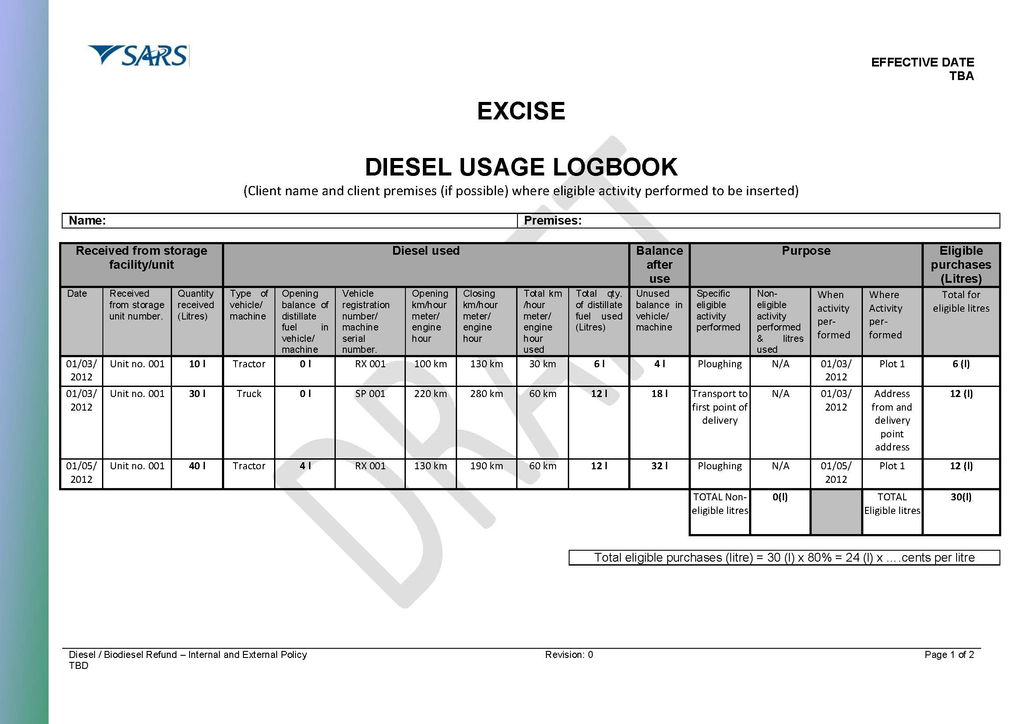
The world of diesel rebates is experiencing significant changes, particularly for farmers and those in the agricultural sector. Recent decisions by the Gauteng High Court in cases involving diesel refund claims have highlighted the importance of meticulous record-keeping. The court emphasized the need for clear and detailed logs.
In both cases, taxpayers had their diesel refund claims disallowed due to insufficient evidence of eligible use in their logbooks. The court found that vague descriptions and incomplete records made it difficult to differentiate between eligible and non-eligible usage, leading to the denial of the claims. It is crucial for taxpayers to maintain thorough documentation to support their claims, as lacking such evidence may result in SARS rejecting their refund requests.
The key takeaway from these cases is the importance of maintaining precise and detailed records in accordance with the criteria outlined in Schedule 6. Logbooks should provide a comprehensive audit trail of distillate fuel, from purchase to use, to ensure that claims are supported by solid evidence. Taxpayers are strongly advised to prioritize record-keeping to avoid potential disallowance of their diesel refund claims by SARS.

SETA MANDATORY GRANT APPLICATIONS 2024/2025
The SETA grants regulation in line with the Skills Development Act stipulates that employers must:
- Submit a Workplace Skills Plan and Annual Training Report (WSP/ATR) to their allocated SETA by 30 April each year.
- Submit a report and plan for Pivotal programmes
- Receive 20% of Mandatory Grants subject to meeting SETA requirements (SDL contributions).
Should you have any questions or require further information, please do not hesitate to reach out to Licinda Cordier; licinda.cordier@pinionza.com.
POPI AND PAIA COMPLIANCE
POPIA (Protection of Personal Information Act): POPIA primarily aims to protect personal information relating to identifiable individuals (natural persons) and, in some cases, identifiable existing organisations (juristic persons). It sets out requirements for the lawful processing of personal information, including its collection, storage, use, and disclosure, to ensure the privacy and protection of individuals’ personal data.
PAIA (Promotion of Access to Information Act): PAIA, on the other hand, focuses on providing access to information. Its goal is to facilitate the exercise of the constitutional right to access any information held by the State, as well as any information held by private individuals or organisations. PAIA ensures transparency by promoting the availability and disclosure of information, subject to justifiable restrictions and limitations.
The annual reporting deadline for the PAIA (Promotion of Access to Information Act) in South Africa is 31 May 2024. If you are an Information Officer for a public or private body, it’s essential to ensure that your report is comprehensive, accurate, and submitted on time. The Information Regulator oversees compliance with both the PAIA (Promotion of Access to Information Act, 2000) and the POPIA (Protection of Personal Information Act, 2013). Remember to fulfil your obligations promptly to maintain compliance with these regulations.
Both Acts play important roles in balancing the rights of individuals to access information and the protection of personal information. It is essential for business owners to understand and comply with the requirements of both Acts to ensure legal compliance and protect the rights of data subjects.
Pinion Human Capital have been equipped to help your company methodically adhere to the requirements of the law by offering support in respect of POPI and PAIA compliance.
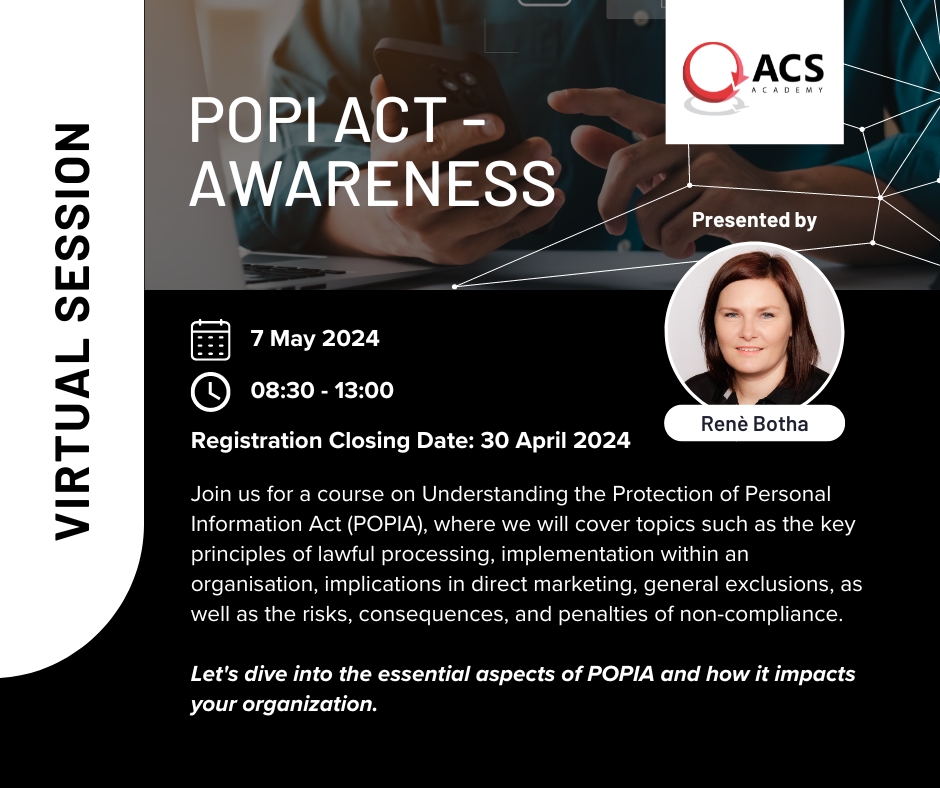
Should you have any questions or require further information, please do not hesitate to reach out to Licinda Cordier licinda.cordier@pinionza.com or register for the Online POPIA Awareness scheduled for 7 May 2024 via https://www.surveymonkey.com/r/ACADEMYPOPI

Trusts & Tax Compliance
The number of trust registrations has increased significantly over the past 2 years, with 47% of newly registered trusts in 2023 being registered as taxpayers with SARS. However, there are still an estimated 60% to 65% of trusts not registered as taxpayers. SARS plans to use third-party data to register existing unregistered trusts. SARS also plans to register trusts as taxpayers simultaneously with their registration with the Master of the High Court, similar to new company registrations with the CIPC.
SARS requires ALL trusts to submit tax returns, but has made provision for “passive trusts” which are compared to dormant companies with no economic activity. SARS uses the term “passive” as trusts require ongoing compliance. Passive trusts exclude trusts that do not actively trade, such as those holding private residences or passive investments. This allows for a shorter, simplified tax return process for dormant trusts.
A trust only needs to submit provisional tax returns if it qualifies as a provisional taxpayer. The deadline for submitting annual tax returns for trusts depends on whether they have any taxable amounts remaining at the end of February each year.
The timing of when a trust must submit its annual tax return can have significant consequences for trustees and practitioners. If a trust qualifies as a provisional taxpayer, it can submit its tax return later in the year, but if it does not, it must submit it earlier. To help alleviate time pressure, it may be beneficial to leave even a small taxable amount in the trust to extend the deadline for submitting the tax return.
Income distributions to non-resident beneficiaries are to be taxed in the trust from 1 March 2024. This should be taken into consideration in the determination of whether a trust qualifies as a provisional taxpayer for that tax year.
SARS warned that administrative penalties for late submission of trust tax returns will be introduced from September 2024 (note that late submission penalties are already applied to other taxpayer types). Trustees were urged to bring their tax affairs up to date before September 2024 to avoid penalties (this includes the so-called “dormant trusts”).
Tax alert for dividend distributions in South Africa
An amendment has been made to section 8EA of the Income Tax Act No. 58 of 1962 that will impact all dividends, including foreign dividends, received or gained from years of assessment starting on or after 1 January 2024.
Section 8EA is an anti-avoidance rule.The amendment will affect all dividends received from January 1, 2024 onwards. The change means that dividend yields on third-party-backed shares will be considered income unless the funds from the shares are used for a qualifying purpose. Companies with significant preference share holdings should review their arrangements to ensure compliance with the new rules.

SARS Email scams
We strongly encourage all clients to remain vigilant against SARS email scams. Some emails may appear authentic but could potentially be fraudulent. If you have any doubts or would like a second opinion, please don’t hesitate to contact your Client Manager.
Here are some tips to help you spot a potential email scam:
- Check the sender’s email address: Make sure the email is actually coming from a legitimate SARS email address (e.g. “@sars.gov.za”). Be cautious of emails coming from suspicious or unfamiliar email addresses.
- Avoid clicking on links or downloading attachments: Be wary of any email that asks you to click on a link or download an attachment, especially if it prompts you to provide personal or financial information.
- Watch out for spelling and grammar errors: Scammers often make careless mistakes in their emails, such as spelling and grammatical errors. Legitimate organizations like SARS typically have professional email communications.
- Look for urgency or threats: Scammers may try to create a sense of urgency or use threats to pressure you into providing personal information or making payments. SARS would typically not use such tactics in their communications.
- Contact SARS directly: If you receive an email that you suspect may be a scam, do not respond to it. Instead, contact SARS directly through their official website or customer service hotline to verify the legitimacy of the email.
By staying vigilant and following these tips, you can protect yourself from falling victim to SARS email scams. Remember, when in doubt, always err on the side of caution and verify the authenticity of any email communication before taking any action.

Important Dates
25 April 2024- VAT manual submissions and payments
30 April 2024 – VAT electronic submissions and payment
30 April 2024 – CIT Provisional tax payments
30 April 2024 – WSP ATR Submission deadline
31 May 2024 – POPI & PAIA Annual reporting deadline
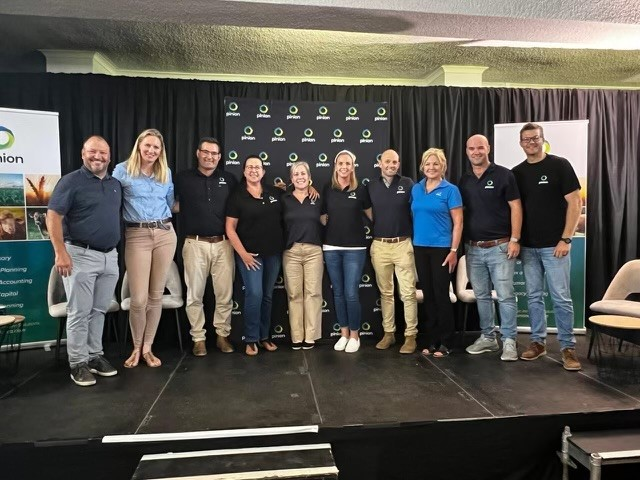
Pinion SA hosted a 2-day Agri Business Conference in March with clients and Industry Partners. We discussed the latest trends and challenges in the Agri Business Industry, as well as opportunities for collaboration and growth. The conference was a great success, with insightful discussions and networking opportunities for all involved. We look forward to hosting more events like this in the future to continue driving innovation and progress in the Agri Business Sector.
A special thanks to our Pinion Global Network Partners who joined us and shared valuable insight into the Agri industry.

“Leadership and learning are indispensable to each other.” – John Fitzgerald Kennedy
Congratulations Mel on your graduation of IWFSA FASSET Women’s Legacy Programme!
Disclaimer:
The information supplied herein should not be used or relied upon as professional advice. No liability can be accepted for any errors or omissions nor for any loss or damage arising from reliance upon any information herein. Always contact our office for specific and detailed advice. Any legal information presented is a precis of current legislation, is subject to change and should not be used as a substitute for detailed professional advice.
Copyright © 2024 Pinion South Africa. All rights reserved.