

Build Your Farm Safety File
A compliant safety file isn’t just about ticking boxes — it’s about protecting your people, your operation, and your livelihood. One of the most important tools in achieving this is your Health & Safety File.

A compliant safety file isn’t just about ticking boxes — it’s about protecting your people, your operation, and your livelihood. One of the most important tools in achieving this is your Health & Safety File.
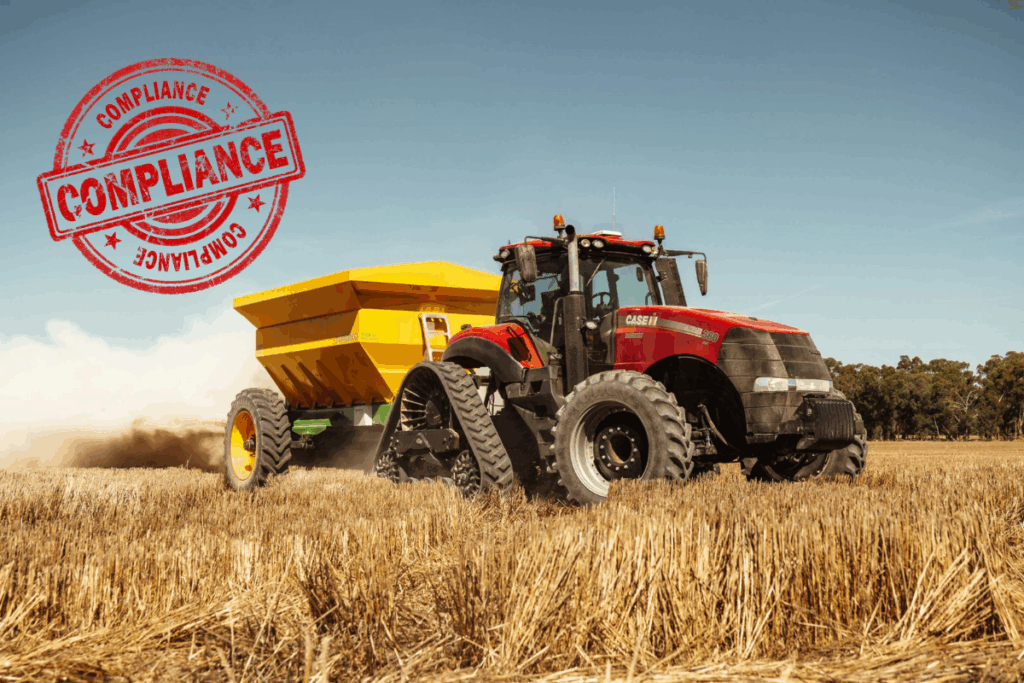
Staying on top of safety regulations with Pinion SA’s handy farm compliance checklist! Running a farm is more than just planting, harvesting, and managing livestock — it also means taking responsibility for the health and safety of everyone on site. South African labour law requires farms to comply with strict Health & Safety regulations, and non-compliance can have serious consequences for both workers and owners. To help you stay on top of your compliance, we’ve created a practical farm safety checklist. Health & Safety File Your Health & Safety File is the foundation of compliance. ☐ Do you have a site-specific Health & Safety File? ☐ Are the following included: – Legal appointments – Risk assessments – Registers & checklists – Training records – Inspection schedules **Legal Reference:** CR 3(6), GAR 9 Legal Appointments Certain roles must be formally appointed to ensure accountability. ☐ Is the farm owner or manager formally appointed (Section 16(2))? ☐ Are Health & Safety Representatives appointed and trained (Section 17)? ☐ Are there competent appointees for: – Tractor/machinery operation – First Aid – Firefighting – Equipment inspection **Legal Reference:** OHSA Sections 16–18, GSR 2 Risk Assessments & Safe Work Procedures Risk management is not a one-off — it should be part of your daily routine. ☐ Do you have a baseline risk assessment for your farm? ☐ Are task-based risk assessments conducted for daily operations? ☐ Are hazards communicated to workers (e.g., toolbox talks, signage)? ☐ Do workers have access to safe work procedures? **Legal Reference:** OHSA Section 8(2)(d) Incident Reporting Every injury or near miss matters. ☐ Are all injuries and near misses recorded and investigated? ☐ Is a First Aid box available and maintained? ☐ Are injury reports submitted to the Department of Labour as required? **Legal Reference:** GAR 8, COIDA Act PPE & Training Providing safety gear is not enough — workers must also be trained. ☐ Are the correct PPE items issued for each task? ☐ Is there proof of training on: – Equipment/machinery – Chemical handling – Manual handling ☐ Are training certificates up to date? Monthly Checks & Maintenance Regular inspections save lives and prevent costly breakdowns. ☐ Are tractors, trailers, and equipment inspected regularly? ☐ Are fire extinguishers and emergency signage maintained? ☐ Are chemicals labelled, stored safely, and accompanied by MSDS? Safety Awareness & Culture Compliance is more than ticking boxes — it’s about building a culture of safety. ☐ Are toolbox talks conducted regularly? ☐ Are H&S Committee meetings held where required? ☐ Do workers feel empowered to report unsafe conditions? Need Help? We’ve got your back. Pinion SA’s Handy Farm Compliance Checklist helps you quickly assess your legal safety responsibilities. From PPE to incident reporting, we cover it all. Pinion SA can assist with: Use it to assess where you stand — and if you’re unsure or need help, Pinion SA offers a free compliance audit (you just cover travel). Visit our website or contact ohs@pinionza.com for more information.

Discover the top 5 hazards on farms and simple ways to prevent accidents. Protect yourself and your team – safety starts with awareness!

Agriculture is facing increasing pressure to adopt sustainable practices, and carbon has emerged as a hot topic in the conversation. But what does it really mean for farmers, and is it worth investing time and resources into these markets? Agronomist Andrew Beckerling tackled this complex question head-on in a recent session about decoding carbon, helping attendees cut through the hype and understand the real implications of carbon in agriculture Carbon is About Soil, Not Just Markets Andrew began by grounding the conversation in what matters most: soil health. Too often, discussions about carbon focus solely on financial incentives, ignoring the biological and ecological benefits that come with improving soil carbon. He reminded attendees that carbon is not just a market commodity—it is a vital part of healthy soils – it’s about biology. Increasing carbon levels in your soil offers several tangible benefits for any farm: However, Andrew cautioned that healthy soils don’t happen by accident. “You can’t just change; you need to manage the change once you’ve made it,” he explained. Soil improvement requires consistent management practices such as cover cropping, reduced tillage, and targeted organic amendments. Without ongoing care, the gains in carbon and soil health can be quickly lost. The Reality of Carbon Markets Once the biological importance of carbon was established, Andrew turned to the emerging carbon economy—a topic that is often shrouded in uncertainty and hype. His assessment was frank and practical, highlighting both the opportunities and limitations for farmers: Decoding Carbon Key Takeaways for Farmers The overarching message for those considering carbon trading was clear: approach with knowledge and caution. Carbon may represent a long-term opportunity for improving soil health and generating income, but it is not a quick win. Farmers should: Andrew’s session underscored that decoding carbon is first and foremost a tool for building resilient, productive soils. While carbon markets may offer financial incentives, the real value lies in improving the biological health of your land. Farmers who focus on this foundation are best positioned to benefit both ecologically and economically. In the end, carbon is more than just a market trend—it is a practical pathway to healthier, more productive soils. For farmers, the decision to invest in carbon strategies should be informed by science, guided by expert advice, and aligned with long-term farm goals. By understanding your baseline, managing soil health consistently, and carefully evaluating market opportunities, carbon can become a meaningful part of a resilient and profitable farming operation. Get in touch At Pinion SA, we partner with clients to deliver a comprehensive suite of services, including tax, business and agri-consulting, advisory, wealth management, and compliance solutions to meet all your business support needs. Our core values of Accountability, Excellence, and Innovation drive everything we do, ensuring that you receive the highest level of service and expertise. Visit our website and see more about what we offer or contact info@pinionza.com for more information.

Water risk is one of the most pressing challenges facing South African agriculture today. With climate change, infrastructure limitations, and policy uncertainty all playing a role, understanding and managing this risk is essential for long-term resilience. With nearly two decades of experience in hydrology, climate change, and environmental water strategy, Dr. James Cullis delivered a compelling session on one of the most urgent issues facing South African agriculture: water risk. As Technical Director at Zutari and a recognised expert in water resource management across Africa, Australia, and New Zealand, Dr. Cullis provided attendees with a clear view of both the scale and complexity of the challenge ahead. Understanding the Multidimensional Nature of Water Risk Dr. Cullis emphasised that water risk is far more complex than simple drought or rainfall decline. It is a multidimensional challenge shaped by a combination of factors: A key insight shared was that while climate change is accelerating water-related risks, it is often poor infrastructure and delayed policy implementation that create the greatest vulnerabilities. In other words, the compounding nature of these risks makes proactive planning essential. Key Considerations for Farmers and Policy Makers Dr. Cullis outlined several strategic considerations to strengthen resilience in South African agriculture: A Systems Approach to Water Risk According to Dr. Cullis, managing water risk successfully requires a systems-level perspective. This involves balancing engineering solutions, clear and timely policy, and efficient on-farm water management practices. By integrating these elements, South African agriculture can better navigate the intertwined physical, institutional, and reputational challenges it faces. Practical strategies exist that can help farmers and agricultural businesses manage water risk more effectively. These include investing in precision irrigation technologies, implementing rainwater capture systems, and rehabilitating or upgrading existing infrastructure to minimise water losses. Collaboration across the sector is also critical—farmers, municipalities, and policymakers must work together to create integrated plans that anticipate and mitigate risks before they escalate. Lessons from countries such as Australia and New Zealand show that proactive water policies and strategic infrastructure investments can significantly reduce vulnerability. Adapting these approaches to South Africa’s unique conditions can strengthen resilience, ensuring that agricultural production remains sustainable even in the face of climate variability and growing water pressures. The session served as a crucial reminder that water risk is not a distant threat—it is a present reality requiring immediate, coordinated action. For farmers, policymakers, and businesses alike, proactive water management isn’t just an operational priority; it is a strategic necessity for long-term resilience. Get in touch At Pinion SA, we partner with clients to deliver a comprehensive suite of services, including tax, business and agri-consulting, advisory, wealth management, and compliance solutions to meet all your business support needs. Our core values of Accountability, Excellence, and Innovation drive everything we do, ensuring that you receive the highest level of service and expertise. Visit our website and see more about what we offer or contact info@pinionza.com for more information.

A highlight of The Pinion Agri Conference 2025 was a keynote session by Chantell Ilbury, a globally respected strategic thinker and scenario planner. With decades of experience guiding organisations and governments through uncertainty, Chantell brought a timely and powerful message: in a changing world, we must rethink the “rules” that shape our future-fit agri business decisions from a global and local perspective. Global Scenarios – Where the World Might Be Headed Chantell presented four possible global trajectories based on two axes: Global Recession vs Global Growth and One World vs Divided World. These were mapped to clear scenario titles: The key insight here was that the most likely global future, “UV”, is one of uneven, two-speed growth, within a divided world. Farmers and agri businesses must prepare for global fragmentation characterised by diverse markets, complex risks and shifting alliances. Chantell also shared a framework of strategic “global flags” which are early signals of change every agri business leader should be monitoring. These included: The bottom line is that these “flags” are not predictions, they are early warnings. The more we spot and prepare for them, the more resilient our businesses become. Chantell brought the conversation home to agriculture, identifying direct implications and trends that must shape our thinking going forward from a global perspective such as increasing fuel prices, pressure on food security, heightened environmental concerns, expanding markets and rising input costs. The South African Scenario – Navigating Uncertainty at Home Chantell then brought the focus closer to home with a compelling look at South Africa’s national crossroads. She presented four possible local scenarios built on the tension between economic conditions (positive vs negative) and social cohesion (high vs low): The key insight is that South Africa currently appears stuck in a Cautionary Tale, with signs of erosion in both governance and unity. Moving toward a “People’s Economy” will likely require passing through either “Mind the Gap” or “Solidarity Fund”, both of which carry real challenges, particularly for business. National Flags to Watch Chantell urged us to track early warning signals that will shape the country’s future. Key among them: Rules of the Game: What We Can Count On (and What We Can’t) To close, Chantell left the audience with a powerful distinction between certainties (the rules of the game we can rely on) and uncertainties (the ones that still hang in the balance): Certainties in South African Agriculture These are foundational forces shaping the future of farming: Key Uncertainties These are critically important but difficult to predict: In a world defined by uncertainty and change, Chantell reminded us that the strongest businesses aren’t those with perfect predictions, but those with the clearest thinking. To build a future-fit agri business, leaders must recognise the rules they can rely on, stay alert to the flags that signal change and remain agile enough to adapt when new realities present themselves. It’s not about avoiding uncertainty, it’s about being prepared for it. Get in touch At Pinion SA, we partner with clients to deliver a comprehensive suite of services, including tax, business and agri-consulting, advisory, wealth management, and compliance solutions to meet all your business support needs. Our core values of Accountability, Excellence, and Innovation drive everything we do, ensuring that you receive the highest level of service and expertise. Visit our website and see more about what we offer or contact info@pinionza.com for more information.

Tom’s session, titled “Performance Connections,” explored how teams unlock their potential. An incredibly insightful talk that resonated deeply with our audience of farmers and agri-business leaders.

Pinion Wealth invites its valued clients to a unique opportunity to gain insightful perspectives on the 2025 investment outlook with Ninety-One’s virtual event. This comprehensive session will delve into both local and global market dynamics, providing expert insights to help you navigate the complex investment landscape in 2025 and beyond. With key discussions on global economic trends and the future of South Africa’s economy, this 2025 investment outlook event will equip you with the knowledge needed to make informed decisions and position your portfolio for success in the year ahead. 2025 Investment Outlook Overview: Join Jeremy Gardiner and Clyde Rossouw for a deep dive into the 2025 investment outlook for South Africa’s fragile democracy and its profound implications for investors in the year ahead. This session will examine the intersection of local political and economic challenges, as well as global market trends, to provide a comprehensive understanding of how these factors will shape investment opportunities and risks. With expert analysis and practical insights, Jeremy and Clyde will help you navigate uncertainty, equipping you with the tools to make informed and strategic investment decisions in a rapidly changing environment. Date & Session Times for the 2025 Investment Outlook: Thursday, 20 February 2025 Morning Session: 10:00 – 11:45 (Zoom) Afternoon Session: 15:00 – 16:45 (Zoom) Why Attend? As the world digests the return of Donald Trump to the White House, Americans are left pondering: Is this the ‘new dawn’ so many anticipate, or the ‘dark storm’ others fear? Meanwhile, South Africans are navigating the uncertain road ahead for our Government of National Unity (GNU). While markets have reacted positively, investors remain cautious, waiting to see tangible progress. Jeremy Gardiner, a seasoned expert, will share his insights on the global political landscape, including the profound implications of shifting power in the US, and how these developments may impact emerging markets like South Africa. Although hope and optimism have returned to some degree, Jeremy will address the vulnerabilities and threats that persist, providing a comprehensive 2025 investment outlook for investors. In addition, Clyde Rossouw will explore the local environment, particularly focusing on the opportunities and challenges in South Africa’s economy and political landscape. Together, they will help you navigate these complexities with actionable investment strategies. Key Insights to Expect: Global Volatility: The return of figures like Donald Trump and its potential impact on global and local markets. Emerging Market Challenges: Why South Africa faces ongoing uncertainty and what that means for investors. Local Growth Opportunities: How infrastructure improvements and stable electricity supply could foster growth in South Africa. Strategic Positioning: How to approach investing in a world filled with both opportunities and risks. South Africa stands at a critical juncture. While global and local challenges persist, there are growing signs of recovery and opportunity. The return of stable electricity generation and infrastructure improvements are encouraging, but investors must navigate the landscape with caution. Jeremy’s insights will help provide a roadmap for positioning your investments for success in 2025. Join the Discussion Don’t miss this opportunity to hear from two of the leading voices in the investment world. Register here for the morning session or register here for the afternoon session on 20 February 2025, and gain the knowledge you need to make confident, informed decisions as we move into the year ahead. Important information: Should you require a CPD certificate, please complete the certificate information questions accurately, as it will appear on the certificate in the format you’ve entered your data. In order to qualify for CPD points, you would need to attend at least 90% of the full webinar session. You will receive the certificate automatically within 2-3 weeks of the webinar. Take stock with us. Let’s unpack what the future holds. If you have any questions or need further assistance, don’t hesitate to contact Pinion Wealth.

In an important update for businesses and employers, the South African government has announced a National Minimum Wage Increase, set to take effect on 1 March 2025. The new minimum wage will rise from R27,58 per hour to R28,79 per hour, marking an approximate increase of 4.4%. This adjustment will affect businesses across all sectors, with a few exceptions. The National Minimum Wage Increase is a crucial step toward improving the standard of living for workers in South Africa, promoting fair wages, and reducing income inequality. It ensures that workers in lower-wage industries will see a direct benefit, contributing to the country’s ongoing efforts to improve the welfare of its workforce. Here’s what you need to know about this important change to the National Minimum Wage Increase and how it impacts businesses and employees alike: Key Points to Note: New National Minimum Wage Increase Rate:Starting 1 March 2025, the mandatory National Minimum Wage Increase will set the wage at R28,79 per hour. This new rate applies to all businesses governed by NMW legislation, making it a legal requirement. Application to All Sectors:This adjustment will be applicable to workers across a wide range of industries. Importantly, farmworkers and domestic workers are also included, ensuring they receive the same National Minimum Wage Increase of R28,79 per hour. Employer Responsibility:Employers must comply with this wage adjustment in order to meet legal obligations. Non-compliance could lead to significant legal and financial consequences for businesses. Consequences of Non-Compliance: Failure to implement the new National Minimum Wage Increase can result in serious legal and financial consequences for businesses, including: Compliance Orders:Employers who fail to adjust wages in line with the National Minimum Wage Increase could be issued with compliance orders by the Department of Employment and Labour. A compliance order mandates that the employer make immediate adjustments to wages and could also include specific deadlines for payment. Non-compliance with these orders could further escalate the situation, resulting in additional penalties. Penalties and Legal Action:Businesses that disregard the National Minimum Wage Increase may face significant fines and penalties. These enforcement measures are designed to ensure that all employers follow the law. In some cases, persistent failure to comply can result in legal action, which could include court proceedings, damaging the reputation and financial stability of the business. This could be costly and detrimental to both the business and its employees. It is crucial for all employers to adhere to the National Minimum Wage Increase regulations to avoid facing these serious repercussions. Ensuring compliance not only protects your business from legal action but also supports fair pay practices, contributing to a healthier, more equitable workforce. Why This Matters: The National Minimum Wage Increase serves as a fundamental part of improving the standard of living for workers in South Africa. By ensuring fair wages across industries, the government aims to reduce poverty, inequality, and economic disparity in the workforce. This wage adjustment helps lift many workers out of poverty, providing them with a more secure financial future. As an employer, making this adjustment is not only a legal obligation but also a step toward contributing to a more equitable and sustainable economy. Compliance with the National Minimum Wage Increase promotes fairness in the workplace, reduces the wage gap, and fosters a more motivated and productive workforce. It helps create a positive work environment, leading to stronger relationships between employers and employees, which ultimately benefits the business in the long term. If you have any questions or need assistance with understanding how the National Minimum Wage Increase impacts your business, feel free to reach out to us. You can contact Pinion directly at info@pinionza.com for more information and expert support. We’re here to help you stay compliant and navigate these changes smoothly.

We’re thrilled to invite you to the 2025 Pinion Agri Conference—a dynamic event dedicated to exploring the key principles, strategies, and innovations that are shaping the future of agriculture. Whether you’re an industry veteran or just starting out, the Pinion Agri Conference 2025 promises to be a valuable experience full of expert insights, meaningful discussions, and opportunities to connect with fellow professionals. 2025 Pinion Agri Conference Highlights: Opening The 2025 Pinion Agri Conference with Tom Dawson-Squibb Tom Dawson-Squibb, a high-performance coach, will kick off the 2025 Pinion Agri Conference with a powerful session on Performance Connections. He’ll share his expert perspective on how teams can work together to bring out the best in each other—a crucial element for success in any field, including agriculture. Expert Workshop with Chantell Ilbury Join acclaimed author and strategist Chantell Ilbury for an engaging, hands-on workshop at the 2025 Pinion Agri Conference, where you’ll explore the art of scenario planning and how to develop adaptive strategies for the agricultural industry. This session is designed to give you practical tools you can immediately apply to your own work. Networking Lunch Take the opportunity to connect with fellow agricultural professionals over lunch at the 2025 Pinion Agri Conference. Whether you’re looking to forge new partnerships or just share insights with others, this is the perfect chance to meet like-minded individuals who are passionate about the future of agriculture. Afternoon Sessions with Industry Leaders Our afternoon lineup at the 2025 Pinion Agri Conference features thought leaders on critical agricultural topics: James Cullis (Water Resources Engineer) will address the ever-important issue of water availability—a resource that is vital to the future of farming. Andrew Beckerling (Agronomist) will dive into the ongoing carbon debates, exploring how the agricultural sector can play a role in reducing its carbon footprint. Wrap-Up Session with Pinion Advisory To ensure the key takeaways from the 2025 Pinion Agri Conference resonate, our team at Pinion Advisory will lead a closing session, helping you distill the most valuable insights from the day and offering guidance on how to implement them in your own work. Evening Dinner with Adi Birrell End the day on a high note with a dinner featuring Adi Birrell, renowned South African Cricket Coach, who will share his approach to high-performance management. Get a unique perspective on leadership, teamwork, and achieving success in high-pressure environments—lessons that are just as relevant to agriculture as they are to sports at the 2025 Pinion Agri Conference. Sector-Specific Focus Groups: On March 12th, at the 2025 Pinion Agri Conference, we’ll host specialised sessions tailored to the needs of different agricultural sectors: Dairy, Beef, and Fiber Industries: Dive deep into the issues and opportunities affecting these sectors and collaborate with other professionals who share your focus. Citrus Growers: If you’re a citrus grower, you won’t want to miss the related topics at the CGA Summit on Day 2 in Gqeberha. Event Details: Date 11th March: 8:30 AM – Late 12th March: 8:30 AM – 11:30 AM Location Running Waters, Kragga Kammard, Port Elizabeth Don’t miss this chance to contribute to the future of agriculture at the 2025 Pinion Agri Conference. Whether you’re looking to gain new knowledge, build your network, or be part of the conversation on agriculture’s future, this event is the place to be. Reserve Your Spot Now! CLICK HERE to Book Now.We can’t wait to welcome you to a day filled with learning, collaboration, and innovation! For more information, visit our website.